Swarm in Your Tree? What Happens Next
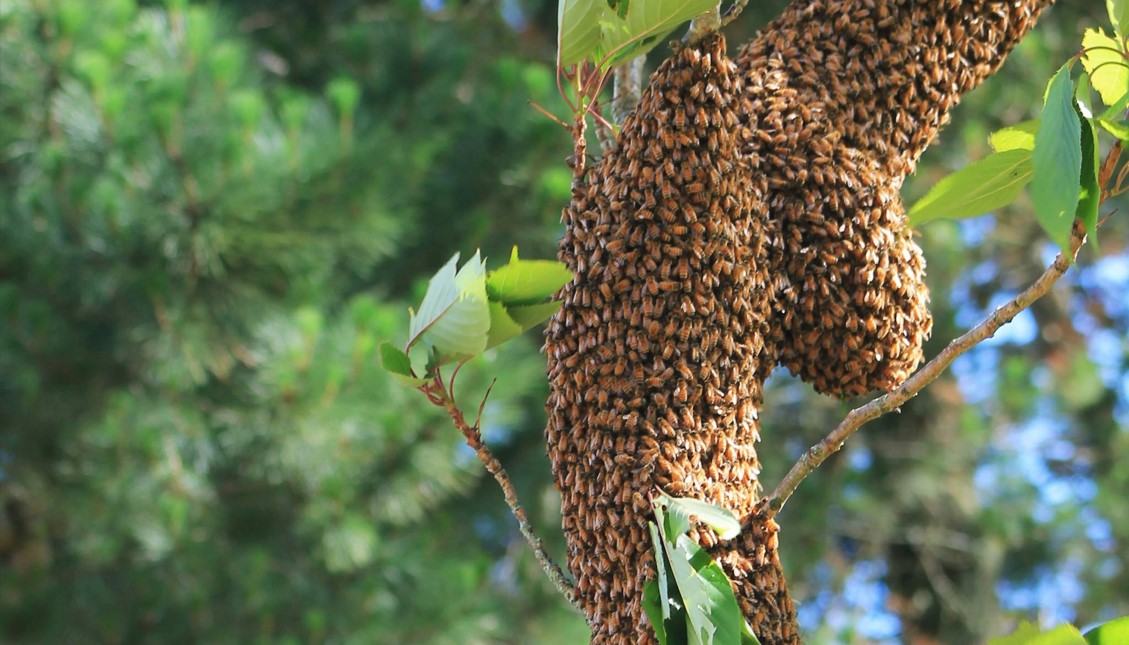
Your phone rings at 2pm. A neighbor three streets over has bees hanging from their apple tree. Lots of bees. A basketball-sized cluster. They want to know if you can do something about it. You grab equipment you hopefully prepared months ago - box, sheet, ladder, maybe a saw - and drive over hoping the swarm hasn't already left.
This scenario plays out thousands of times each spring across beekeeping regions. Swarms cluster temporarily on convenient structures while scout bees search for permanent nest sites. The cluster might stay an hour. It might stay three days. There's no way to know. What is certain is that capturing swarms requires responding immediately when called, because hesitation means arriving to an empty branch and a disappointed homeowner.
Package bees cost $150-225. Nucleus colonies run $200-300. A captured swarm costs gas money, your time, and whatever equipment you brought. For beekeepers building colony numbers, swarm calls represent free stock if you can get there fast enough. For homeowners, swarms represent thousands of stinging insects on their property that they desperately want removed. Both parties have motivation to make the transfer happen quickly.
What actually occurs during swarm capture depends entirely on where the bees landed. A cluster on a low shrub branch takes fifteen minutes to collect using basic techniques. A swarm thirty feet up in an oak tree might be physically impossible to reach, forcing the beekeeper to either wait for the bees to move lower or admit defeat. Between these extremes lies the messy reality of most swarm calls - accessible but awkward, requiring ladders and creativity and acceptance that you won't capture every single bee.
Here's what the swarm capture process actually looks like from the beekeeper's perspective, why timing matters more than technique, and what determines whether a swarm call succeeds or fails.
What Swarming Actually Is
Swarming is colony reproduction. A strong hive prepares to divide by raising new queens. Before the first virgin queen emerges from her cell, the old queen leaves with roughly half the worker population - anywhere from 10,000 to 30,000 bees depending on colony strength. This departing group constitutes the swarm.
The bees leaving gorge themselves on honey before departure, filling their honey stomachs with as much as they can carry. This honey provides energy for the journey and resources to build initial comb at their new location. A bee with a full honey stomach can't curve her abdomen enough to sting effectively, which partly explains why swarms are generally docile. They're not defending a hive full of resources - they're homeless and focused on finding new accommodation.
The swarm's first landing spot is rarely their final destination. The queen is a poor flyer - she has a large body with worker-sized wings. Long-distance flight exhausts her. The swarm typically lands within a few hundred feet of the original hive, clustering on whatever convenient structure presents itself. Tree branches are common. Fence posts, mailboxes, parked cars, playground equipment - any surface where bees can grip works temporarily.
Once clustered, scout bees begin searching for suitable nest cavities. These scouts fly outward in all directions, investigating tree hollows, building voids, abandoned equipment, or any space meeting bee requirements - roughly forty liters volume, elevated entrance, protection from weather. Scouts who find promising sites return to the cluster and perform waggle dances describing the location. Other scouts visit the advertised sites and add their assessments.
This democratic process takes time. The swarm might reach consensus quickly if an excellent site is nearby. Or they might debate for days if multiple mediocre options exist. Weather affects timing - swarms won't move during rain. Temperature matters - cold nights discourage departure. The cluster's duration varies unpredictably, which creates time pressure for anyone trying to capture it.
During the clustered phase, bees become increasingly committed to their temporary location. A fresh swarm that landed an hour ago will readily accept a new home. A swarm that's been clustered for two days has established scout networks and decision-making momentum toward specific nest sites. The longer you wait, the harder it becomes to persuade them that your capture box represents a better option than whatever site they're already evaluating.
The Apiary Project has free tools for beekeepers - calculators, schedulers, and seasonal guides.
Browse the Tools →Why Beekeepers Want Swarms
The economic motivation is straightforward. Free bees beat purchased bees. A hobbyist planning to expand from two hives to four can either buy two packages at $300-400 total, or capture two swarms at essentially zero cost beyond time and gas money. Commercial operations building colony numbers can save thousands by capturing swarms rather than purchasing replacement stock.
But economics alone doesn't explain why experienced beekeepers keep gear in their vehicles all spring and respond enthusiastically to swarm calls. Captured swarms often perform better than purchased packages. The bees are local, proven survivors who made it through winter, built up enough strength to swarm, and possess genetics adapted to regional conditions. Package bees might come from southern producers whose genetics suit warm climates but struggle in northern environments.
Swarms also arrive with a mated, laying queen. Packages sometimes come with failing queens or queens that don't mate successfully. A swarm queen has already proven herself capable - she led a successful colony to swarm preparation, which requires excellent laying patterns and colony organization. You're getting tested genetics rather than gambling on unknown quality.
The collection process itself appeals to many beekeepers. Swarm calls provide drama and urgency unlike routine hive inspections. You're responding to a neighbor's panic, climbing ladders, shaking branches, dealing with unpredictable situations. For beekeepers who find regular maintenance somewhat monotonous, swarm calls inject excitement into the season.
There's also community value. Responding to swarm calls creates positive PR for beekeeping. Homeowners terrified of the bee cloud threatening their backyard appreciate someone who arrives, remains calm, and removes the problem without killing anything. These interactions educate non-beekeepers about honeybee biology and create goodwill that benefits the entire beekeeping community when neighbors are more tolerant of hives nearby.
Finally, some beekeepers simply can't resist free bees. Even experienced operators running more colonies than they really want will respond to swarm calls because the opportunity is too good to pass up. The swarm gets captured, installed in equipment the beekeeper needs to find a use for, and suddenly they're managing one more hive than they planned. This pattern repeats annually.
The First Challenge: Is It Actually Honeybees?
Many swarm calls turn out not to involve honeybees. Wasps, hornets, and bumblebees nest in exposed locations that homeowners mistake for honeybee swarms. Before investing time traveling to a location, experienced swarm-catchers request photos. A photo instantly reveals whether you're dealing with actual honeybees or some other insect that doesn't interest beekeepers.
Honeybee swarms form distinctive clusters - thousands of bees hanging in a mass, clinging to each other in layers. Individual bees are fuzzy, amber-brown striped, and roughly 15mm long. The cluster itself has a characteristic teardrop or blob shape. Wasps and hornets build paper nests attached to structures. Bumblebees nest in ground cavities or dense vegetation, creating small nests rarely visible as swarms.
The distinction matters because beekeepers collecting honeybee swarms have no interest in or equipment for handling wasps. Wasp removal requires different techniques, protective equipment, and often involves extermination rather than relocation. A beekeeper who drives thirty minutes to collect a reported swarm and finds yellow jackets has wasted an evening.
Some callers confuse established hives with swarms. A homeowner might call about "bees swarming in my chimney" when what they actually have is a colony that moved into the chimney weeks ago and has been building comb. This represents a "cutout" rather than a swarm catch - dramatically more complicated, requiring opening structures, extracting comb, finding the queen, and dealing with established defensive bees. Beginning beekeepers should walk away from cutouts. Even experienced beekeepers approach them cautiously.
Photos also reveal accessibility. A swarm photographed from fifty feet away suggests height challenges. A photo showing bees clustered on a privacy fence behind a barking dog suggests complications beyond just bee collection. These details help beekeepers decide whether to attempt collection or politely decline.
The Equipment You Actually Need
The minimal swarm catching kit fits in a car trunk. A cardboard box or nuc box provides the collection container. A white bed sheet works for ground-based catches. A spray bottle with sugar water helps calm flying bees. Pruning shears or a small saw lets you cut branches if necessary. Basic protective gear - veil at minimum, full suit if you prefer.
That's the minimum. Experienced swarm catchers often add specialized equipment. Ladder - essential for clusters above eight feet. Multiple boxes in different sizes because you can't predict swarm size. Queen clip - a small cage for securing the queen once located. Lemongrass oil - mimics scout pheromone and attracts bees to capture boxes. Straps or bungee cords for securing loaded boxes. Flashlight for evening captures.
The preparation happens before swarm season starts. Beekeepers who respond to calls maintain ready equipment because swarms don't wait. Having to assemble gear, locate boxes, or repair ladders after receiving a call means arriving to find the swarm departed. Successful swarm catchers keep complete kits assembled and accessible April through June.
One commonly overlooked item: a way to close the capture box once bees are inside. Cardboard boxes need tape. Wooden boxes need covers. Screen material works for ventilation. The captured swarm needs containment for transport but also needs airflow to prevent overheating. Beekeepers who forget this detail end up with dead bees in closed boxes or escaped bees from inadequately secured containers.
Another consideration: protection for the vehicle. Twenty thousand bees in a box placed in your car's back seat will find any gap. Even well-secured boxes release some bees. Covering the box with a sheet, securing it in the trunk, or having a dedicated vehicle compartment prevents loose bees from finding their way to the driver's area during transport.
The Actual Capture Process
Walk up to the swarm location and assess before doing anything. How high? What's the cluster attached to? Are bees actively flying or settled and quiet? Is the surface shakeable or will bees need brushing? These questions determine technique.
Low clusters on shakeable branches represent the ideal scenario. Position a capture box directly under the cluster. Hold the box close to the bees. Grab the branch with your other hand and give it one sharp, firm shake. Most of the cluster drops into the box. Place the box on the ground underneath where the swarm was, with the opening facing up. Bees remaining on the branch and those that missed the box start marching toward the mass of bees in the container.
This works because swarms follow their queen through pheromone. If the queen landed in the box during the shake, every other bee attempts to join her. Even bees still in the original location detect the queen's new position and relocate. The beekeeper's job becomes waiting for stragglers to sort themselves out, then closing the box once the migration concludes.
But clusters rarely cooperate perfectly. Sometimes the branch won't shake enough to dislodge bees. Thick branches or trunks don't move when grabbed. In these cases, beekeepers brush or scoop bees into containers. This takes longer and disturbs more bees, but eventually accomplishes the same goal. Each scoop transfers a few hundred bees. Dozens of scoops later, most of the swarm occupies the box.
High clusters create different problems. A swarm fifteen feet up requires a ladder. A swarm thirty feet up might be unreachable. Beekeepers assess risk versus reward. Climbing a ladder while holding a box full of bees tests both courage and balance. Some beekeepers rope boxes to branches, shake the branch from the ladder, and lower the loaded box on the rope. Others simply accept that certain swarms are too high to safely collect.
Cutting branches works when feasible. Small diameter branches can be sawed through while someone holds the branch steady. The cut branch with bees attached lowers to ground level where standard techniques apply. This requires permission from the property owner and works only for expendable branches. Nobody wants to remove major tree limbs for bee collection.
The white sheet method adds theater to the process. Spread a white sheet on the ground leading to the capture box, which sits propped open at the high end. Shake or brush bees onto the sheet. They naturally climb upward toward the box, marching up the incline and into the entrance. This method provides excellent visibility - beekeepers can watch the queen if she appears and redirect any bees wandering the wrong direction.
Finding The Queen
Getting most of the bees into the box doesn't guarantee success. If the queen isn't included, workers will eventually leave to find her. Some beekeepers specifically hunt for the queen during collection, caging her in a queen clip once located. This guarantees success - cage the queen, place the cage in the box, and every worker follows within hours.
Queen location is educated guessing. She's typically near the center of the cluster since she landed first and other bees clustered around her. If you're shaking a branch, she's likely in the densest part that shakes off first. If you're scooping bees, watch for the larger-bodied bee with longer abdomen moving deliberately through the crowd. Queens don't move like workers - they lumber rather than dash.
Many beekeepers skip queen hunting. It takes time, requires good eyes, and introduces risk of crushing her accidentally. If most of the swarm transferred into the box and bees start clustering at the box entrance rather than returning to the original site, the queen is probably inside. That's sufficient confirmation for most collectors.
The test is simple: leave the box near the original cluster site and watch bee movement. If bees are leaving the box and returning to the tree, you didn't get the queen. If bees are leaving the tree and entering the box, you probably did. If uncertain, wait an hour and check again. Queens rarely remain alone - if the bulk of the swarm is in your box, the queen almost certainly is too.
Timing affects queen location. Fresh swarms (landed within the last hour) have queens still near the original landing point. Older swarms that have been clustered for days might have queens buried deep in the interior. As bees settle into temporary residence, they build protective layers around the queen. These established swarms are harder to fully capture because dislodging every bee becomes necessary.
What Happens After Capture
Close the box once confident the queen is inside and most workers have joined her. This might be immediately after shaking the swarm or might be hours later after stragglers relocated. Transport the sealed box to your apiary before dark. Bees orient to location when first leaving a hive. If you install a captured swarm during daylight, workers will leave for orientation flights and return to the capture site rather than the hive. Installing after dark or keeping the box closed for 24 hours prevents this problem.
Installation involves transferring bees from capture box into permanent equipment. Open the capture container inside or directly above a hive box containing frames. Shake or pour bees onto the frames. They'll quickly disappear between frames and start organizing themselves. Add a feeder - captured swarms need resources while establishing. The honey they carried from the original hive won't last long.
Some beekeepers install swarms into nucleus boxes - smaller five-frame equipment. This gives swarms manageable space to establish before expanding into full-sized hives. Others install directly into standard ten-frame equipment. Both approaches work. The key is providing drawn comb if available rather than just foundation. Swarms build faster on existing comb than starting from bare foundation.
Feeding is non-negotiable. Yes, the swarm carried honey from their original hive. That honey is already partially consumed. The swarm needs to build comb, raise brood, and establish food stores before they can sustain themselves. Sugar syrup feeding for the first 2-4 weeks helps them accomplish this. Starvation kills newly-installed swarms that don't receive supplemental nutrition.
Resist inspecting too soon. Newly installed swarms need time to orient, build comb, and start laying. Opening the hive three days after installation disrupts establishment. Wait at least a week, preferably two, before conducting a thorough inspection. When you do inspect, confirm the queen is laying - you should see eggs and young larvae. If the swarm is queenless, you'll need to combine it with another colony or introduce a purchased queen.
Why Swarm Calls Fail
Time represents the primary failure mode. Swarms move on quickly. A cluster present at 2pm might depart by 5pm. Beekeepers who can't respond within an hour or two miss many collection opportunities. This creates the "swarm catcher's dilemma" - do you keep complete gear in your vehicle all spring, or do you accept that you'll miss swarms while assembling equipment?
Height makes many swarms uncollectable. Bees that cluster forty feet up in mature trees can't be safely reached. Some beekeepers maintain long extension ladders specifically for swarm collection. Others acknowledge their limitations and only attempt ground-level or low-branch swarms. The free bees aren't worth serious injury.
Location access creates problems. Swarms that land on private property require owner permission to access. Owners might be unavailable when you arrive. Swarms behind locked gates or in secured areas can't be collected without access. Swarms on busy streets where ladder setup would block traffic might be physically accessible but logistically impossible.
Weather affects success rates. Swarms won't move during heavy rain but also become harder to collect. Wet bees don't shake off branches as readily. Cold temperatures make bees cluster tighter, which makes dislodging them more difficult. Evening collections race against darkness - bees settle in for the night, making collection harder, but installing at dusk prevents orientation flight issues.
Equipment failure undermines collections. Ladders that don't extend high enough. Boxes too small for the swarm size. Insufficient transport security leading to escaped bees. Lack of proper closure mechanisms. These preventable problems ruin otherwise successful collections. Experienced swarm catchers maintain backup equipment specifically because failures happen at the worst times.
The most frustrating failures: arriving to find the swarm already departed. You drive across town, haul equipment to the site, and discover an empty branch. The homeowner swears the bees were there thirty minutes ago. They're not anymore. This happens to every swarm catcher eventually and represents the fundamental uncertainty of the whole enterprise.
The Economic Reality
Swarm collection saves money only if you value your time at zero. Let's calculate: you maintain ready equipment year-round - say $200 in boxes, tools, and gear. You respond to ten swarm calls per season. Three swarms have already left when you arrive. Two are too high to collect. You successfully capture five swarms.
Each collection requires roughly two hours - travel, capture, travel to apiary, installation, cleanup. Ten attempts mean twenty hours invested. The five successful captures saved you from purchasing five packages at $200 each, so $1,000 gross savings. Subtract $200 equipment costs plus gas, and you netted maybe $750 for twenty hours work. That's $37.50 per hour.
Not terrible if you view it as paid work. Actually quite good if you'd otherwise pay yourself minimum wage. But this assumes every captured swarm survives and produces. Some swarms abscond - install them and they leave within days. Some prove to be secondary swarms with virgin queens who don't mate successfully. Some are small swarms that never build sufficient population. The actual success rate is probably three viable colonies from ten collection attempts, not five.
Rerun the math with realistic expectations: $600 gross savings (three successful colonies), minus $200 equipment, equals $400 net savings. Twenty hours invested. You earned $20 per hour, which drops below minimum wage in many states. Viewed purely economically, swarm collection barely justifies itself for hobbyists.
Commercial operations face different economics. If you're already maintaining hundreds of colonies and respond to swarm calls during normal work hours, the time cost is minimal. The equipment cost amortizes across more collections. A commercial beekeeper who captures thirty swarms per season at a 50% success rate (fifteen viable colonies) saves $3,000 in package costs. That's real money at commercial scale.
But most beekeepers don't respond to swarm calls for pure economic benefit. The education value matters - learning to handle bees in unpredictable situations builds skills. The community goodwill matters - each successful collection is a neighbor who now thinks positively about beekeeping. The satisfaction matters - capturing swarms feels like accomplishment in ways that buying packages doesn't.
What Homeowners Actually Want
The person calling about a swarm usually cares about one thing: getting the bees gone. They don't care whether you successfully collect them or they fly away naturally. They just want their backyard usable again without thousands of stinging insects present. This creates interesting dynamics.
Some homeowners actively help - fetching ladders, holding boxes, moving furniture that blocks access. Others retreat inside and watch through windows, occasionally calling through doors to check progress. Neither approach is wrong. Homeowners shouldn't have to assist with bee removal on their own property.
Communication matters. Explain what you're doing and why it takes time. A homeowner watching you wait for bees to march into a box might wonder why you're not doing something more active. If you explain that disturbing them now would scatter the swarm and make collection harder, they understand the patience. Without explanation, they assume incompetence.
Manage expectations about completeness. Some bees will remain after collection. A few dozen bees clustered where the swarm was might persist for hours or even until the next day before dispersing. Homeowners who expect zero bees after your collection feel dissatisfied when stragglers remain. Explaining that these remaining bees are harmless and will leave once they realize the swarm departed prevents complaints.
Some homeowners want updates after collection. Did the swarm survive? Did they produce honey? These follow-ups build positive relationships. Delivering a small jar of honey the following year with a note "from the swarm you called about" creates memorable goodwill and ensures that homeowner calls you for any future bee issues rather than pest control.
The Ethical Questions
Should beekeepers collect swarms from their own hives? The practice is common - your hive swarms, you capture the swarm, you reinstall them in equipment. This increases your colony count using your own bees. But it also perpetuates swarming genetics. If you consistently collect swarms from hives that swarm regularly, you're breeding for swarms rather than selecting against them.
The counterargument is that swarming represents natural colony health. Strong hives swarm. Preventing swarming through management requires frequent intervention and constant vigilance. Maybe it's more sustainable to let strong hives swarm and capture those swarms rather than fighting natural behavior.
Should beekeepers take all swarms regardless of source? Some swarms come from feral colonies that have survived without treatment. These bees possess valuable treatment-free genetics. Other swarms come from neglected hives that are disease vectors or mite bombs. Collecting indiscriminately risks introducing problems into your apiary. But how do you know which is which?
Distance represents another ethical consideration. Some beekeepers will drive an hour for a swarm call. This burns fuel and time for marginal benefit. At what point does the environmental cost of response exceed the benefit of saving bees? When does personal benefit (free bees) outweigh sensible resource allocation?
What Makes It Worth Doing
Despite uncertain economics and unpredictable success rates, beekeepers continue responding to swarm calls enthusiastically. Part of this is pure opportunity - you can't get free bees if you don't try. Part is skill development - each swarm presents unique challenges that build capability. Part is community integration - becoming the local bee person creates connections beyond beekeeping.
But mostly it's about the moment when the swarm successfully transfers into your box. Twenty thousand bees that were scattered across a branch now clustered peacefully in a container. The homeowner relieved. The bees saved from potential extermination. The sense that you accomplished something concrete and visible. That moment justifies the equipment maintenance, the time invested, and the failed attempts.
Beekeeping largely involves invisible work. You open hives, move frames, make adjustments that might or might not improve outcomes. Results emerge over months. Swarm collection provides immediate feedback. You either got the swarm or you didn't. The bees are either in your box or they aren't. That clarity appeals to beekeepers who spend most of their time managing ambiguous situations with delayed outcomes.
The unpredictability matters too. Every swarm call is different. Different locations, heights, cluster patterns, bee temperaments. You can't develop a perfect system because circumstances vary too much. This forces creative problem-solving and adaptation. For beekeepers who enjoy puzzles more than routine, swarm calls provide engaging challenges that routine inspections don't offer.
And there's the simple fact that swarms are beautiful. Twenty thousand bees moving as a single coordinated entity, deciding collectively where to establish a new colony, executing an ancient reproductive strategy that predates human civilization. Being part of that process - even just as the person providing them a new home - connects beekeepers to biology operating at scales beyond individual organisms. That connection is worth something beyond economic calculation.