Pollinator Gardens (What the Research Shows Actually Works)
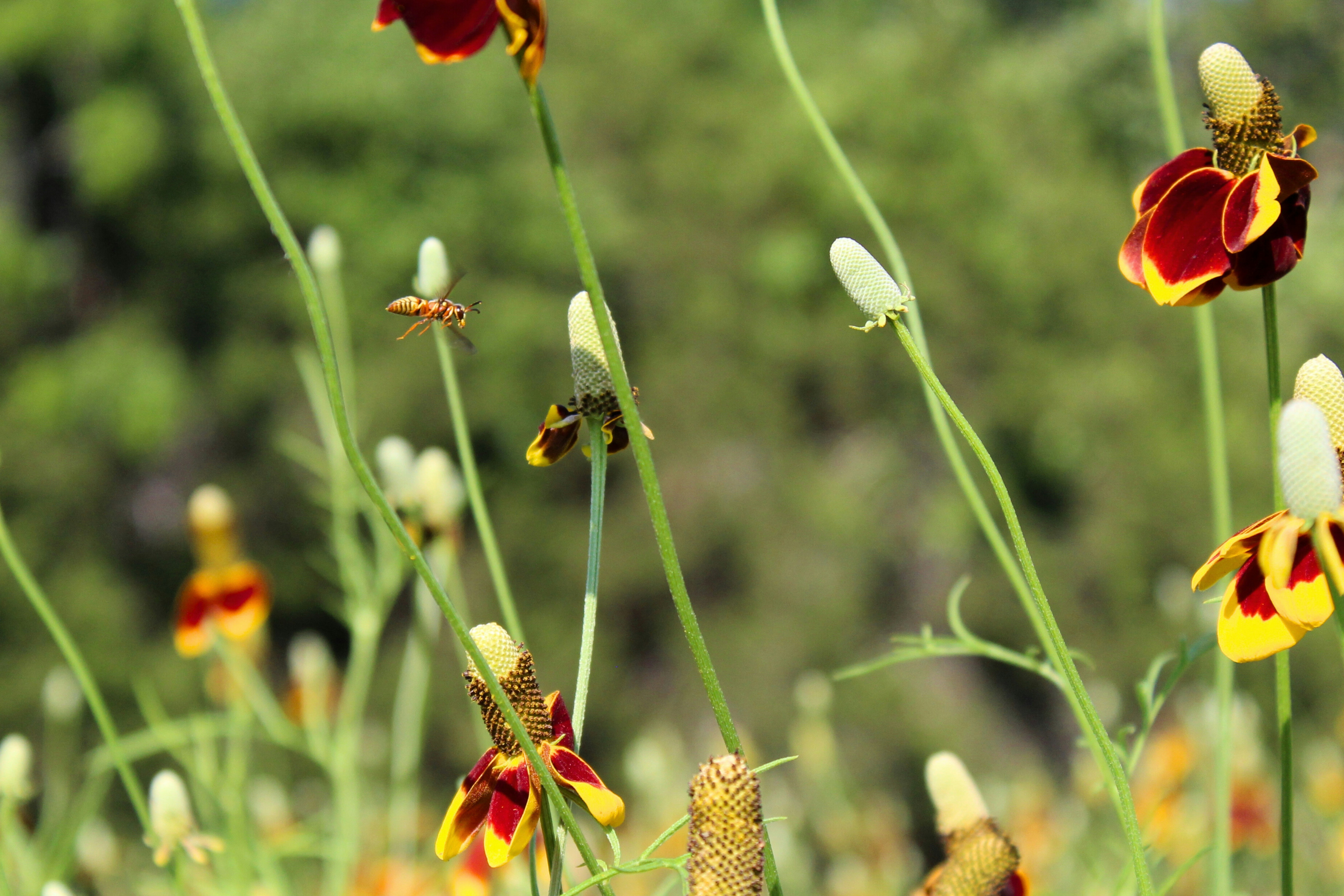
The seed packets at the garden center say "Pollinator Mix" in a font that suggests this is simultaneously a product and a moral act. Pour the contents into disturbed soil in April, water occasionally, and by July you will have helped Save The Bees. The packet usually contains cosmos, zinnias, sunflowers, clover, and maybe some coneflowers. It costs $4.99. The instructions are on the back. The bees, presumably, have been notified.
The reality is more interesting than the marketing suggests, and more complicated, and simultaneously more encouraging and more deflating - depending on which research you read and what question you're trying to answer.
The question most people ask: does planting a pollinator garden help bees?
The answer, drawn from roughly 30 years of published research: yes, with caveats large enough to merit their own section.
The Research
The scientific literature on pollinator gardens - sometimes called "wildlife-friendly gardens," "pollinator plantings," or "urban habitat patches" - has grown substantially since the early 2000s. Several major findings have emerged from studies conducted in the US, UK, Germany, and Australia, and they collectively explain why some gardens are genuinely useful and others are aesthetically pleasing approximations.
Native plants consistently outperform non-native ornamentals. A 2019 meta-analysis by Pardee and Philpott found that plantings dominated by native species supported approximately four times more native bee species than plantings dominated by non-native ornamentals. The mechanism is straightforward: native bees coevolved with native plants. Tongue lengths match flower depths. Foraging behaviors match flower structures. Emergence timing matches bloom timing. Non-native ornamentals may produce nectar and pollen, but the fit between plant and pollinator is looser - sometimes physically impossible for specialist bees.
Which brings up something that has been uncomfortable for the nursery industry: cultivars are not equivalent to their wild-type species. A 2014 study by Comba et al. and subsequent work by Annie White at the University of Vermont demonstrated that horticultural cultivars of native plants often support significantly fewer pollinator visits than the original species. The reasons vary: doubled flowers with extra petals that obstruct access to nectaries, altered flower color with reduced UV patterns that bees use to find rewards, reduced nectar production (breeding for visual traits inadvertently reduced floral rewards), modified scent profiles. A "native plant" on the nursery tag may not function as a native plant for pollinators if the cultivar has been bred far from its wild-type characteristics.
A garden with 20 species of flowers blooming in succession from spring through fall also consistently supports more pollinator species than a mass planting of even a highly attractive single species. Different bee species have different tongue lengths, different flower preferences, and different active seasons. A garden that provides only summer-blooming flowers doesn't help spring-emerging bees or fall-active bees. Diversity of flower morphology and bloom timing creates niches for diverse pollinator communities - which is the point of the whole enterprise.
Gaps in the bloom calendar - periods when nothing in the garden is flowering - create resource dearths that can be fatal for colonies and individuals that depend on the garden as a food source. In most US regions, the critical gaps are early spring (March-April, when few garden plants are blooming but many bees are already active) and late fall (September-October, when most annuals have finished but some bees are still foraging). Filling these gaps with early- and late-blooming species - spring bulbs, willows, asters, goldenrod - dramatically increases a garden's season-long value.
And a flower garden without nesting substrate is a restaurant without housing. Approximately 70 percent of native bee species nest in the ground - in bare soil, sandy banks, or compacted earth. A mulched, manicured garden with no exposed soil provides food but no nesting opportunities for the majority of native bees. Other species nest in hollow stems, in beetle tunnels in dead wood, or in abandoned snail shells. Leaving dead stems standing through winter, maintaining patches of bare ground, and retaining dead wood transforms a food source into an actual habitat.
The Apiary Project makes the case for evidence-based pollinator conservation.
See How to Take Action →The Species Count
How many bee species does a typical pollinator garden support? The answer depends on region, plant composition, and garden size, but the research provides some benchmarks:
A well-designed residential pollinator garden in the eastern US (0.25 to 0.5 acres with 30+ native plant species and nesting substrate) supports approximately 50 to 80 native bee species over the growing season. Urban gardens in less biodiverse settings support 30 to 50 species. A single garden in Tucson, Arizona, documented by Frankie et al., yielded 105 bee species over three years of monitoring.
These numbers are meaningful. The US hosts approximately 4,000 native bee species. A single garden supporting 50 to 80 species represents 1.5 to 2 percent of national diversity. A neighborhood with 20 gardens of varying composition and age can collectively support 100 to 200 species. A city with thousands of gardens creates a habitat matrix that, in aggregate, rivals the species diversity of surrounding natural areas - and in some urban studies, exceeds it, because the diversity of cultivated plants in cities provides more varied floral resources than the simplified agricultural landscapes surrounding many American cities.
The Uncomfortable Math
Here's where the encouragement meets the deflation.
The US has lost approximately 150 million acres of pollinator habitat since 1992 - primarily through agricultural intensification and development. The typical residential pollinator garden occupies 500 to 2,000 square feet (0.01 to 0.05 acres). The number of pollinator gardens in the US is unknown but probably numbers in the low millions, given the popularity of pollinator seed mixes and native plant nurseries since the mid-2000s.
If 5 million American households have planted pollinator gardens averaging 1,000 square feet each, the total area is approximately 115,000 acres. This replaces less than 0.1 percent of the habitat lost since 1992. The scale mismatch between individual gardens and landscape-level habitat loss is enormous.
This doesn't mean gardens are useless. It means gardens alone are insufficient. Individual gardens function as habitat patches in a fragmented landscape. Their value depends on their connectivity - whether they're close enough to other patches (other gardens, parks, greenways, wild areas) for pollinators to move between them. An isolated garden in a sea of pavement supports transient visitors. A garden connected to other habitat patches supports resident populations.
The concept of "stepping stone habitats" - small patches close enough together for pollinators to reach sequentially - is central to urban pollinator conservation. Research on garden connectivity in the UK found that native bee diversity in a given garden was predicted not just by the garden's own plant composition but by the density of gardens within 250 to 500 meters. More gardens nearby meant more bee species. The network matters as much as the individual node.
What Actually Helps
The research is fairly clear on what makes a pollinator garden effective versus performative. The distinction matters because a garden that checks the "pollinator-friendly" box without meeting the biological requirements is a feel-good installation that supports primarily generalist species (honey bees, some common bumblebees) while failing to provide habitat for the specialist species most in need of conservation.
Plant selection is the foundation: native species, wild-type or close to wild-type, not cultivars bred for doubled flowers or unusual colors, and not ornamental non-natives even if they produce nectar. The research consistently shows native plant dominance is the single strongest predictor of native bee diversity in garden settings. Bloom continuity is the second variable - something blooming from the earliest spring species (willows, crocuses, pussy willows) through the latest fall species (asters, goldenrod, witch hazel), with no multi-week gaps in between.
Structural diversity within the plant selection matters too. Multiple flower morphologies - flat-topped composites for short-tongued bees, tubular flowers for long-tongued bees, cluster-type inflorescences for generalists - serve a broader community than a monoculture of any single species, even an excellent one. A garden of nothing but coneflowers is better than lawn but substantially worse than a mix of coneflowers, penstemons, asters, goldenrods, milkweeds, and native grasses.
Nesting substrate is the element most gardens omit. Bare ground patches (unmulched, south-facing if possible), dead wood, and standing dead stems left through winter provide what the majority of native bees actually need. A pollinator garden treated with insecticides is an ecological trap - attracting bees to a toxic food source. Herbicides eliminate the "weeds" (dandelions, clover, violets) that provide some of the most important early-season forage. And the research consistently finds that "messy" gardens support more pollinator species than tidy ones. Leaf litter overwinters bumblebee queens. Standing dead stems contain cavity-nesting bee larvae. The manicured garden eliminates nesting habitat while retaining only food.
The Network Vision
The individual pollinator garden is a node. The conservation value emerges from the network.
A city with 10,000 pollinator gardens distributed across its area creates a habitat matrix with an effective footprint far larger than the sum of individual garden areas - because the gardens provide food and nesting opportunities within the foraging range (typically 250 meters to 2 kilometers, depending on bee species) of pollinators that also use parks, greenways, vacant lots, and semi-natural areas.
The research on urban pollinator habitat networks is still developing, but the emerging picture is hopeful: cities can support diverse pollinator communities if the habitat is distributed, connected, and compositionally appropriate. The pollinator garden is not a substitute for landscape-scale conservation (CRP enrollment, highway corridor plantings, agricultural set-asides). It's a complement - a fine-grained habitat layer that fills the gaps between larger conservation areas.
The seed packet at the garden center isn't going to reverse 150 million acres of habitat loss. But 5 million seed packets, planted with native species, connected across neighborhoods, maintained with ecological intent rather than aesthetic convention - that starts to look like something. Not enough. But something.
The bumblebee that arrives at your coneflower in August doesn't know about the scale mismatch. She knows there's food here. She needs the food. The flower provides it. The math on saving the species is someone else's problem. The math on surviving today is hers.