Comb Honey Production: The $25-Per-Pound Comeback
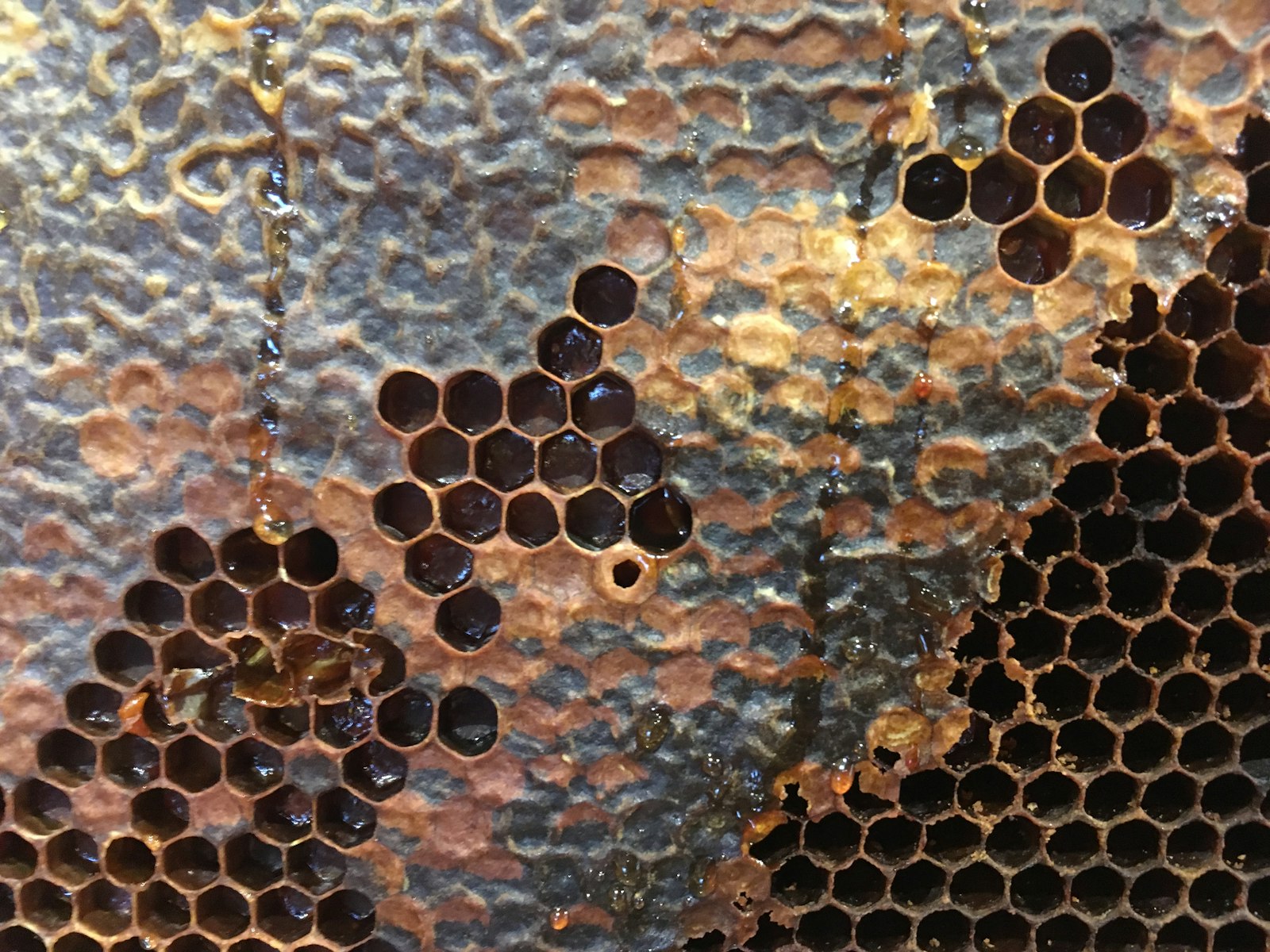
Before 1865, there was no decision to make. All honey was comb honey. A beekeeper harvested frames or skeps or whatever vessel the bees had built in, cut the comb into pieces, and sold it. The buyer chewed the wax, swallowed the honey, spit out what was left. This was honey. This was the only honey. The concept of "extracted" honey - liquid honey separated from its comb - didn't exist because the technology to separate it didn't exist.
Then Franz von Hruschka, a retired Austrian military officer living in Italy, had an idea involving centrifugal force and a metal basket. He announced it at the Brno Beekeeping Conference in September 1865. The device was simple: place a frame of capped honey in a wire basket inside a cylindrical container, spin the basket, and the honey flies out of the cells and collects at the bottom. The comb stays intact. Return the empty comb to the hive. The bees refill it. No wax destroyed. No comb rebuilt from scratch. Pure efficiency.
The extractor didn't kill comb honey immediately. For decades after Hruschka's invention, consumers actually preferred comb honey - specifically because they didn't trust extracted honey. And they were right not to trust it. Honey adulteration in the late 19th century was rampant. Diluted with cheap sugar syrups, cut with glucose, sometimes containing ingredients that had never been inside a beehive. A sealed comb, on the other hand, was tamper-evident by its nature. If the wax caps were intact, the honey was real. Nobody had figured out how to fake a hexagonal wax cell filled with nectar by 60,000 insects.
The comb honey era - roughly 1876 to 1910 - was the golden age. The leading beekeepers in America were all section honey producers. The bee journals of the period read like comb honey trade publications. A single Vermont beekeeper in 1885 produced 44,000 pounds of section comb honey during a 12-day basswood nectar flow, averaging over 93 pounds per colony. These were numbers that would impress a commercial operation today.
The Pure Food and Drug Act of 1906 started the shift. Once extracted honey had legal protection against adulteration, consumers gradually accepted it. The extractor's economics were irresistible - returned combs meant the bees spent their energy on honey, not wax production. By the 1950s, comb honey had nearly disappeared from American retail. By the 1980s, most beekeepers under 40 had never produced it.
And then it came back.
The Taxonomy
The term "comb honey" covers a family of products that differ in presentation but share one defining characteristic: the honey is still inside the wax cells the bees built and sealed.
Cut comb is the simplest form. A beekeeper produces honey in standard frames using thin surplus foundation (or no foundation at all), then cuts the finished comb into uniform pieces - usually squares or rectangles - and packages them in clamshell containers. The equipment requirement is a sharp knife, a cutting board, and some plastic boxes. No extractor. No uncapping knife. No bottling tank. The most accessible entry point for a hobbyist beekeeper who wants to sell something at the farmers market.
Chunk honey (also called liquid and comb) is a piece of cut comb placed inside a jar, then filled with liquid extracted honey. It sells well because the visible comb provides visual proof of authenticity while the liquid honey provides the familiar pourability that consumers expect. It's a compromise product - part spectacle, part convenience.
Section honey is the prestige format. The bees build comb from scratch inside purpose-built small containers, producing a self-contained unit that goes directly from hive to consumer. The major section systems:
Basswood sections are the original. Thin strips of basswood (chosen because its fine, long grain allows folding without splitting) bent into small square boxes, roughly 4.25 by 4.25 by 1.75 inches, holding 8 to 12 ounces. Moses Quinby - generally recognized as the first commercial beekeeper in the United States - was producing section honey in the 1830s. The format dominated the comb honey era. Basswood sections are still manufactured today, though their market share is a fraction of what it was in 1890.
Ross Rounds are circular plastic sections, about 4.5 inches in diameter, designed by Tom Ross in the mid-1970s. Ross, an architect and engineer, spent years iterating on earlier failed plastic section designs before arriving at a system that bees would actually accept and fill. The design worked. Ross Rounds now hold over 90 percent of the section honey market in the US and Canada. Ben Carpenter, a Master Beekeeper near Rochester, New York, purchased Ross Rounds Inc. in 2017 and continues domestic manufacturing. A complete starter kit runs $75 to $130.
Hogg Halfcomb cassettes are a more recent system - interlocking plastic frames that form columns inside a modified super. Invented by John Hogg, later revived by Herman Danenhower of Pennsylvania, and now sold through BetterBee. Each cassette yields 10 to 12 ounce sections with comb visible on one face.
The Apiary Project has free tools for beekeepers - calculators, schedulers, and seasonal guides.
Browse the Tools →Why It's Difficult
Comb honey production is universally described by experienced beekeepers as significantly more demanding than extracted honey production. The reasons are interconnected, and each one can independently ruin a crop.
Timing. Comb honey supers must go on the hive at precisely the moment the major nectar flow begins. Not a week before. Not a week after. If thin foundation sections are placed on a hive before the flow starts, the bees - having nothing better to do with their time - will chew holes in the foundation to cannibalize the wax for use elsewhere in the colony. Those holes rarely get filled back in properly. The resulting comb is irregular, partially filled, and commercially worthless. The nectar flow itself is what forces bees to draw comb quickly, evenly, and completely - the incoming nectar needs somewhere to go, and the bees build with urgency proportional to the volume arriving.
Colony strength. A colony destined for comb honey production needs to be on the edge of swarming - packed with bees, nearly out of room, bursting with the population energy that drives rapid wax construction. A colony that isn't boiling over with workers will stall on filling sections. The few sections that do get built will be uneven, partially capped, with dark spots where bees walked on them repeatedly. This means comb honey producers run larger, more aggressive colonies and have to walk the razor line between "strong enough to fill sections" and "swarmed into the neighbor's oak tree."
White cappings. This is the aesthetic requirement that separates premium comb honey from mediocre comb honey. When bees cap a honey cell, they seal it with a thin layer of fresh wax. If the capping is "dry" - meaning air is trapped between the wax cap and the honey surface - it appears brilliant white. This is what buyers expect. Dry cappings are the visual signature of high-quality comb honey. But cappings darken quickly as bees walk on them. Leave the sections on the hive a week too long and the pristine white turns to cream, then to yellow. The window between "fully capped" and "too much foot traffic" can be a matter of days.
Robbing. When the nectar flow tapers off or during the fall dearth, bees from other colonies will attack partially-filled sections, chewing through cappings to steal the honey. A section with chewed cappings has the resale value of a scratched diamond.
The conventional wisdom in beekeeping communities: successfully producing a full super of clean, white, fully capped comb honey teaches a beekeeper more about colony dynamics, bee biology, and nectar flow timing than years of routine extracted honey production. It requires reading the colony's mood, predicting the flow's timing, and managing the intersection of the two with a precision that extracted honey production simply doesn't demand.
The Economics
The price differential between comb honey and extracted honey is the reason for the comeback. Or at least the reason the comeback has legs.
Extracted honey at a US farmers market in 2026 sells for roughly $8 to $15 per pound, depending on variety and region. The USDA's average reported retail price hovers around $7.50 per pound, though farmers market prices run higher than grocery retail.
Comb honey at the same farmers market sells for $16 to $30 per pound. Cut comb in urban markets routinely hits $1 per ounce - $16 per pound. Ross Rounds (8-ounce sections) sell for $9 to $15 each, which translates to $18 to $30 per pound equivalent. Premium urban markets - New York, San Francisco, Portland - have seen comb honey priced at $2 per ounce. That's $32 per pound.
The math changes a beekeeper's season. A hobbyist with 10 hives producing 60 pounds each - 600 pounds total - selling extracted honey at $10 per pound grosses $6,000. The same 600 pounds sold as cut comb at $20 per pound grosses $12,000. Same bees. Same flowers. Same season. Double the revenue. No extractor purchase required (a decent extractor runs $300 to $1,500). No bottling equipment. No uncapping tools.
The catch is yield. A colony managed for comb honey typically produces 30 to 50 percent less total honey than the same colony managed for extraction, because the bees are spending energy building new wax that would otherwise go into filling returned drawn comb. And not every section comes out sellable - some are partially filled, some have dark cappings, some get damaged. The realistic sellable yield from comb honey production is lower than the theoretical yield from extracted production.
But the price premium more than compensates for the yield reduction. Even at 50 percent of extracted-equivalent yield, the per-pound price difference makes comb honey more profitable per hive for producers who can consistently produce saleable product.
The Adulteration Advantage
Here's where comb honey occupies a unique market position that no amount of clever labeling can replicate for extracted honey.
Honey fraud is a documented, ongoing, international problem. Testing has found that substantial portions of commercial honey on US grocery shelves has been adulterated, ultra-filtered to remove pollen (making geographic origin untraceable), blended with cheap sugar syrups, or processed to the point where it barely meets the legal definition of honey. The US Department of Homeland Security has flagged honey as a fraud-prone import category. The problem is structural: liquid honey in a jar looks like liquid honey in a jar, whether it came from a beehive in Montana or a corn syrup blending facility in a country with relaxed export standards.
Comb honey cannot be faked. Not practically. The hexagonal cells, the wax cappings, the pollen trapped in the comb, the propolis residue on the edges - these are structural features produced by living bees processing real nectar. No industrial process replicates them at a price point that would make fraud profitable. A sealed section of comb honey is the most tamper-evident food product in existence. It's proof of origin in a way that no "100% Pure Honey" label on a jar of liquid can match.
This matters to consumers who have read about the adulteration problem. And in 2026, a lot of consumers have read about it. The articles in the New York Times, the Netflix documentaries, the viral social media threads about fake honey - they've created a consumer base that is skeptical of liquid honey and receptive to a product that visually demonstrates its authenticity.
Nineteenth-century consumers preferred comb honey because they didn't trust extracted honey. Twenty-first-century consumers are developing the same preference for the same reason. The circle completes.
The Instagram Effect
It would be dishonest to discuss the comb honey revival without acknowledging the role of visual culture. Comb honey on a charcuterie board is photogenic in a way that a jar of liquid honey is not. The geometric precision of the hexagonal cells. The golden translucence. The way honey beads on a freshly cut surface. The drip. It photographs beautifully without filters, without staging, without professional lighting.
This matters in a food economy where social media drives purchasing decisions. A farmers market customer who buys a $15 Ross Round and photographs it on a cheese board generates organic marketing that the beekeeper couldn't buy at any price. The product is its own advertisement. The visual appeal creates a feedback loop: consumers buy comb honey, photograph it, post it, other consumers see it, want it, buy it.
The same cultural current that made craft beer, small-batch cheese, heirloom tomatoes, and single-origin coffee marketable created space for comb honey. The artisanal food movement rewards products with visible craftsmanship, traceable origins, and a story. Comb honey has all three. The craft is in the production difficulty. The origin is in the local beekeeper. The story is 160 million years of insect architecture, presented in a clamshell container at the Saturday morning market.
The Production Revival
The USDA's National Agricultural Statistics Service does not track comb honey as a separate category from extracted honey. Total US honey production in 2026 was approximately 139 million pounds from 2.5 million colonies. What percentage of that is comb honey is unknown - the statistical infrastructure for tracking it doesn't exist because, until recently, the volume was negligible.
But the anecdotal evidence of revival is everywhere in the beekeeping community. State beekeeping associations report increasing interest in comb honey production workshops. Equipment suppliers report growing sales of section honey systems. The number of beekeepers selling cut comb and section honey at farmers markets has visibly increased since roughly 2015.
The revival is concentrated in the hobbyist and sideliner segments - beekeepers with 1 to 50 hives who sell directly to consumers. Commercial operations running thousands of colonies for pollination contracts and bulk honey production have no economic reason to produce comb honey. The labor is too intensive, the quality control too demanding, and the distribution channels too small. Comb honey is a small-scale producer's product, which is part of its market identity.
Pass the Honey, a company founded to commercialize comb honey at scale, has demonstrated that there's a retail market beyond farmers markets - their single-serve honeycomb products are sold at Whole Foods, Target, and through Amazon. But the company sources from multiple beekeeping operations and packages in a branded format, which is a different business model than the local beekeeper selling Ross Rounds at the Saturday market.
The Irony
Hruschka's extractor was a triumph of efficiency. It made honey production faster, cheaper, and more scalable. It created the modern honey industry. It freed beekeepers from the skill-intensive, labor-intensive, timing-critical demands of comb honey production. It was, by any reasonable measure, progress.
And 160 years later, a growing number of beekeepers are setting the extractor aside and going back to the product that predated it. Not because the extractor doesn't work. Because the market has rediscovered that the original product - unprocessed, unfakeable, architecturally beautiful, structurally authentic - is worth more.
The bees, it should be noted, have no preference. They build comb whether anyone sells it or not. They've been building it for tens of millions of years, in hexagonal cells that are geometrically optimal for the storage of a viscous fluid in a wax vessel. The only thing that changed is that humans stopped appreciating the vessel and started throwing it away.
Now they're buying it for $30 a pound. The bees remain indifferent. The beekeepers' accountants do not.