Honey Bee Anatomy (What Each Body Part Actually Does)
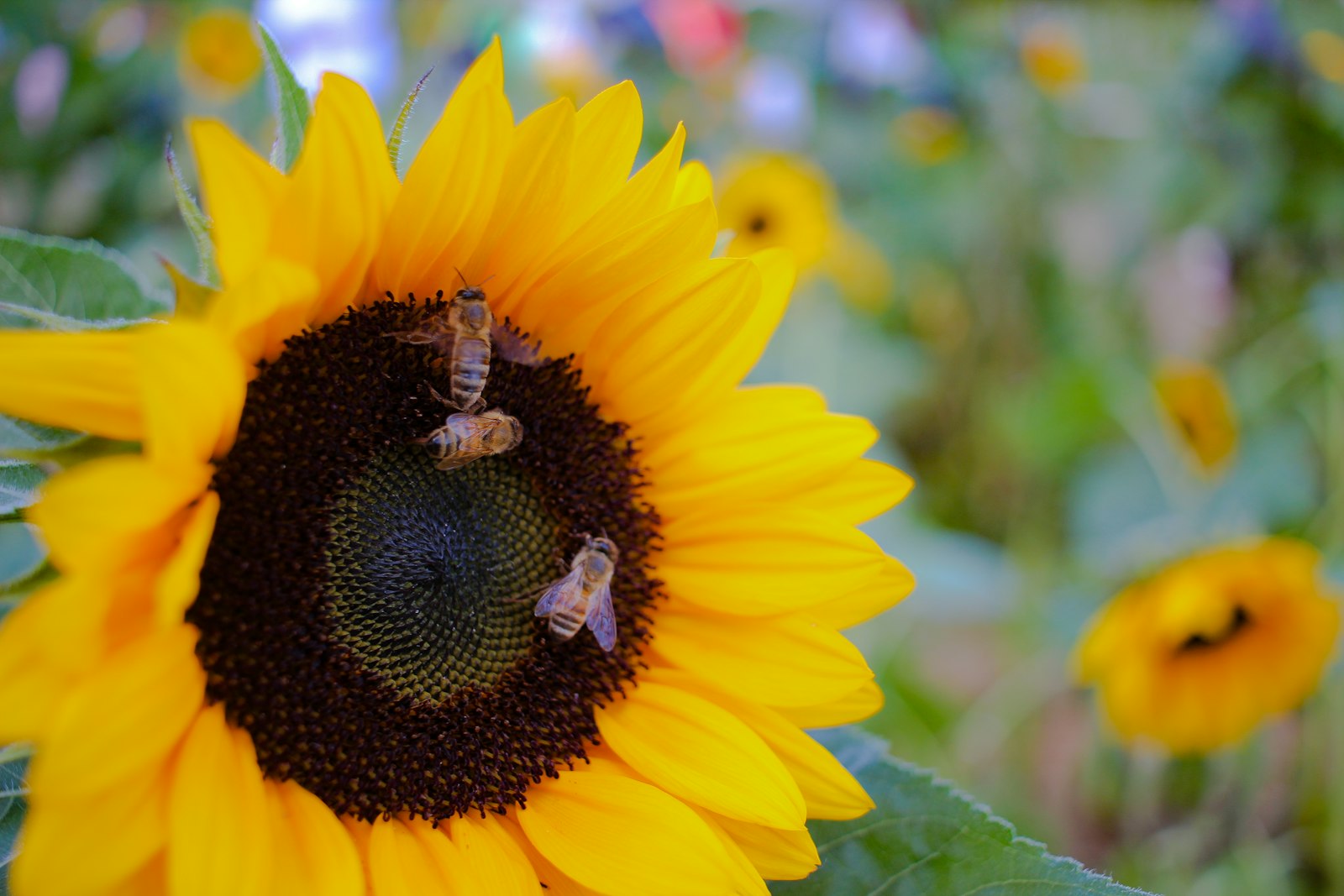
The honey bee's defense weapon is also her death sentence. A worker bee's stinger is equipped with barbs that catch in mammalian skin. When she pulls away, the entire venom apparatus tears free of her abdomen - venom sac, muscles, and part of her digestive tract. She's dead within minutes. But the sting continues pumping venom autonomously for up to a minute after separation, driven by residual muscle contractions in the detached apparatus.
Sacrificing the individual to defend the colony only makes sense if you remember that the colony, not the individual bee, is the unit of natural selection. Evolution found that arrangement acceptable. The bee, having no opinion on the matter, dies defending what the gene pool actually cares about.
This pattern repeats across the entire bee body. Every system is optimized past the point of individual convenience - toward colony function, colony efficiency, colony survival. The inventory is remarkable for something weighing 100 milligrams.
The Exoskeleton
Vertebrates build their skeletons on the inside and wrap them in soft tissue. Insects did it the other way around. The honey bee's structural framework is an exoskeleton - a rigid external shell made primarily of chitin cross-linked with proteins and lipids, serving simultaneously as bones, skin, and armor. It weighs roughly 30 percent of the bee's total body mass, which is proportionally like a human skeleton weighing 45 pounds instead of 15.
The structure is layered. The outermost epicuticle, about 1 to 2 micrometers thick, is waxy and hydrophobic, functioning as waterproofing. Below it, the sclerotized exocuticle provides rigidity. Below that, the more flexible endocuticle allows movement at joints.
The trade-off of external armor: growth requires molting. The larval bee molts five times before pupation, shedding and regrowing its exoskeleton each time. Once the adult bee emerges, no more molting occurs. The adult exoskeleton is final. It wears. A forager bee at the end of her 2 to 3-week career looks visibly tattered compared to a freshly emerged bee - not from aging in any mammalian sense, but from accumulated irreversible mechanical wear.
The Apiary Project tracks honey bee health data so you don't have to.
Explore the Data Hub →The Three Body Regions
The bee body divides into head, thorax, and abdomen, connected by narrow articulations that allow each section to move somewhat independently.
The head is dominated by sensory equipment. Two massive compound eyes occupy the lateral surfaces. Three simple eyes (ocelli) sit in a triangle on top. A pair of antennae extend forward. The mouthparts - a complex assembly of mandibles and a retractable proboscis - occupy the ventral surface. The brain fills much of the remaining space.
The thorax is the locomotion center. All six legs attach here. Both pairs of wings attach here. The thorax is almost entirely filled with flight muscles - the indirect flight muscles that power the wings are the largest muscles in the bee's body, and the thorax has been described as essentially a box of muscle with legs and wings bolted on.
The abdomen contains the digestive system, the reproductive organs, the venom apparatus and sting, the wax glands, and the Nasonov scent gland. The abdomen is the most flexible of the three regions - the segments telescope and expand, visible when a bee breathes (the abdomen pumps rhythmically) and when a queen's abdomen distends with developing eggs.
The Eyes
A worker bee has five eyes - two compound eyes and three ocelli - serving different functions.
Each compound eye contains approximately 6,900 individual ommatidia, each with its own lens, photoreceptors, and neural connection to the brain. The compound eye doesn't form a single coherent image the way a vertebrate eye does - each ommatidium captures a piece of the visual field and the brain assembles them into a mosaic. Lower resolution than human vision, but with critical advantages.
Temporal resolution is the first: the bee's compound eye processes visual information at roughly 200 frames per second, compared to roughly 60 in human vision. A movement that appears as a blur to a human eye is a series of distinct positions to a bee. This is why swatting a bee is harder than it should be - she sees your hand coming in slow motion relative to your perception.
The visual range is shifted toward ultraviolet: bee photoreceptors detect wavelengths from roughly 300 nanometers (deep UV) to 650 nanometers (orange), while humans see 380 to 700 nanometers. The bee cannot see red (which appears black to her), but flowers that appear uniformly white or yellow to humans often display dramatic UV patterns - landing guides directing the bee to the nectary - that are invisible to any human without UV photography equipment.
The compound eye also detects the polarization of light - the orientation of electromagnetic wave oscillation. Skylight is polarized in patterns that radiate from the sun's position. Even on overcast days, patches of blue sky retain their polarization pattern. The bee reads this pattern to determine the sun's position, which is the foundation of her navigation system and the waggle dance compass.
The three ocelli on top of the head are simpler - each is a single lens with a cluster of photoreceptors. They don't form images. They detect light intensity and help the bee maintain orientation during flight by sensing "up" (toward the bright sky). They're also critical for detecting dawn and dusk, the light-level changes that trigger the bee's daily activity cycles and circadian rhythms.
The Antennae
The antennae are arguably the most information-dense sensory organs on the bee's body. Each antenna is segmented - one scape, one pedicel, and a flagellum of 11 segments in workers and queens (12 in drones). The flagellum is covered in thousands of sensilla in at least eight distinct types, each specialized for a different sensory modality.
Olfactory sensilla (sensilla placodea) - plate-like structures, roughly 3,000 per antenna in workers (drones have roughly 30,000, reflecting their need to detect queen pheromones at distance during mating flights) - detect volatile chemicals: floral scents, pheromone signals, alarm compounds. The bee's olfactory discrimination is extraordinary; she can distinguish between chemically similar odors that differ by a single molecular bond.
Taste receptors sit on the antenna tips and also on the tarsi - the feet. When a bee lands on a surface, she tastes it through her feet. This is why a forager's first action upon landing on a flower is often to walk across the petals.
Hair-like mechanoreceptors detect air movement, vibration, and physical contact - critical for in-hive communication in complete darkness. And thermoreceptors and hygroreceptors feed into the colony's thermoregulation system, allowing individual bees to detect temperature gradients across the brood nest and respond by fanning, clustering, or generating heat.
The Circulatory System (Ten Hearts, No Veins)
Insects have an open circulatory system. There are no veins, no arteries, no capillaries. The blood (called hemolymph) fills the body cavity and directly bathes the organs. The hemolymph is pumped by a dorsal vessel - a tubular heart running along the bee's back from abdomen to head, with 10 ostia (valve-like openings) flanked by muscular expansions that contract rhythmically, pushing hemolymph forward from the abdomen toward the head, where it spills into the body cavity and percolates back.
Bee hemolymph is not red. It carries no hemoglobin. It's typically pale yellow or clear, carrying nutrients, hormones, and immune cells - but not oxygen. Oxygen delivery is handled by an entirely separate system.
The Respiratory System (No Lungs)
The bee has no lungs. Oxygen delivery doesn't involve the circulatory system at all. Instead, the bee breathes through a network of tracheae opening to the outside through 10 pairs of spiracles - small valved openings along the thorax and abdomen. Air flows through tracheal tubes branching into finer tracheoles less than 1 micrometer in diameter, penetrating directly into tissues and delivering oxygen to individual cells without any intermediate transport step.
The system is passive at rest and actively ventilated during flight, when rhythmic abdominal pumping forces air through faster. Extraordinarily efficient at the bee's body size. Doesn't scale well to larger bodies, which is one reason insects are small.
The tracheal system has a vulnerability: tracheal mites (Acarapis woodi) infest the large tracheal tubes in the thorax, physically blocking airflow. An infested bee can't oxygenate her flight muscles efficiently. She can't fly as well, tires faster, dies sooner.
The Digestive System (Two Stomachs)
The bee has two stomachs, and the distinction between them is the distinction between a bee eating for herself and a bee working for the colony.
The honey stomach (also called the crop or honey sac) is an expandable storage organ at the front of the digestive tract, holding roughly 40 milligrams of liquid - nearly half the bee's unfueled body weight. When a forager collects nectar, she sucks it through her proboscis and stores it in the honey stomach. During the flight home, enzymes begin breaking nectar's sucrose into glucose and fructose. At the hive, she regurgitates the contents into a house bee's mouth. A forager bee carrying a full crop of nectar hasn't eaten any of it. It's not her food. It's the colony's food. She is, in the economics of it, a tanker truck driver.
The true stomach (ventriculus) is separated from the honey stomach by the proventriculus - a muscular valve controlling what passes from cargo to digestion. When the bee needs to eat, the proventriculus opens and allows some nectar or honey into the ventriculus for her own nutrition. Her caloric intake is a small fraction of the volume she transports.
Winter bees hold their waste for months during confinement, and the rectum can distend to fill a significant portion of the abdominal cavity before the first spring flight. A bee's first spring flight is often a defecation flight, and the relief is presumably considerable.
The gut also hosts a specialized microbiome - a community of bacteria that aids digestion, produces vitamins, and provides immune protection, acquired shortly after emergence and maintained throughout the bee's life.
The Wax Glands
Worker bees between roughly 12 and 18 days old have four pairs of wax glands on the ventral surface of abdominal segments 4 through 7. Each gland secretes liquid wax that solidifies on contact with air into thin, translucent flakes called wax scales, each weighing approximately 1.1 milligrams.
Building one pound of beeswax comb requires approximately 6 to 7 pounds of honey consumed as fuel for the metabolic process of wax synthesis. This is why returning drawn comb to hives after extraction saves colony energy - and why comb honey production, which requires bees to build all new comb every time, results in lower total honey yield.
The Venom Apparatus
The sting is a modified ovipositor - an egg-laying organ repurposed as a weapon. Only female bees have them; drones do not. The two lancets (the barbed shafts that penetrate the target) ratchet deeper via alternating strokes driven by a muscular apparatus. In mammalian skin, the barbs catch. The bee pulls away. The venom apparatus tears free. The detached sac continues pumping for up to a minute, driven by its own residual contractions. The alarm pheromone from the sting site marks the target for additional stingers.
Queen bees have smooth stingers and can sting repeatedly without self-injury. They use them almost exclusively against rival queens.
The Brain
The bee brain contains approximately 960,000 neurons. A human brain contains 86 billion. The bee operates on 0.001 percent of the human neuron count, and the things she does with it - learning, memory, navigation, symbolic communication - are considered remarkable at any scale.
Organized into optic lobes, antennal lobes, mushroom bodies, and central complex, the brain manages flight control at 230 wingbeats per second, sun-compass navigation with time compensation, translation of three-dimensional flight paths into the two-dimensional waggle dance, and the age-dependent behavioral schedule (polyethism) that moves the bee through a series of jobs over her lifetime. The mushroom bodies, disproportionately large in honey bees compared to most insects, physically grow during the transition from nurse bee to forager as the bee accumulates spatial and olfactory memories.
The Flight System
Two pairs of wings - forewings (larger) and hindwings (smaller) - lock together via a row of hooks called hamuli that catch a fold on the trailing edge of the forewing. In flight, four wings function as two. At rest, they uncouple and fold flat over the abdomen.
The wings are not powered by muscles attached to the wings themselves. The indirect flight muscles deform the thorax: one set pulls the thorax roof down, flipping the wings up; another set compresses the thorax front-to-back, springing the roof back and flipping the wings down. The thorax resonates like a tuning fork - each deformation triggers a snap-back that initiates the next stroke. This mechanism allows the roughly 230 wingbeats per second that a direct muscle-to-wing connection couldn't achieve.
The result: a 100-milligram insect flying at 15 miles per hour, carrying loads equal to 80 percent of her body weight, navigating over distances of several miles, on a fuel budget of roughly 2 milligrams of honey per mile.
The Whole Machine
The inventory is absurd for something this small. Nearly 7,000 lenses per eye. Thousands of olfactory sensors per antenna. A taste receptor on each foot. Ten heart chambers pumping clear blood through an open cavity. A tracheal network delivering oxygen directly to cells with no lungs involved. Two stomachs separated by a valve distinguishing food from freight. Eight wax glands synthesizing building material from metabolized sugar. A venom factory producing 11 bioactive compounds. A barbed, self-amputating weapon that continues operating after detachment. A brain that navigates by polarized skylight with fewer neurons than some worms have.
All packed into a body weighing one-tenth of a gram, living six weeks in summer, spending its final days flying until its wings literally disintegrate from mechanical fatigue.
The bee doesn't know any of this is remarkable. She's just doing her job. The remarkable part is left for the species that needs 86 billion neurons to notice.