8-Frame vs. 10-Frame Hives (Why Commercial Operations Started Switching)
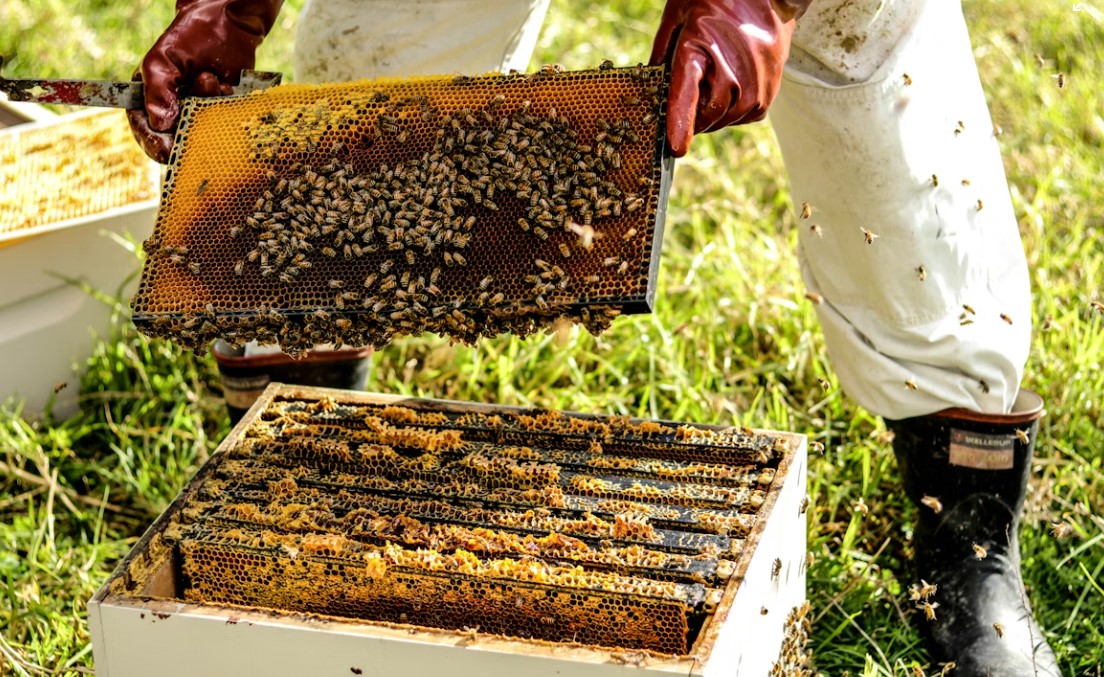
A 10-frame deep hive body full of honey weighs approximately 80 pounds. That's not a typo. Eighty pounds of awkward, bee-covered box that needs lifting overhead, often multiple times during a single inspection.
Now multiply that by 50 hives. Or 500. Or - if you're in commercial pollination - 5,000.
The math explains why an increasing number of beekeepers are making an irreversible decision: switching from the traditional 10-frame Langstroth equipment that's been standard since the 1850s to the lighter 8-frame alternative. The 20% weight reduction sounds modest until you're carrying your fortieth super of the day and your lower back is filing a formal complaint.
The Numbers That Matter
Here's what full boxes actually weigh, according to data from major suppliers like Dadant and Mann Lake:
10-frame equipment:
- Deep box (full): approximately 80 lbs
- Medium box (full): approximately 50-60 lbs
- Shallow box (full): approximately 40 lbs
8-frame equipment:
- Deep box (full): approximately 64 lbs
- Medium box (full): approximately 40 lbs
- Shallow box (full): approximately 32 lbs
That 16-pound difference between a full 10-frame deep and an 8-frame deep doesn't sound revolutionary. But research published in the journal Heliyon in 2019 found that beekeeping involves "excessive lifting well beyond recommended weight limits" in virtually every standard task. The NIOSH lifting index - which measures injury risk - exceeded safe thresholds for every lifting condition tested, even with boxes at table height.
Translation: according to ergonomics researchers, standard beekeeping practices pose a high risk of lower back injury. Every configuration. Every time.
The Apiary Project has free tools for beekeepers - calculators, schedulers, and seasonal guides.
Browse the Tools →Why 10 Frames Became Standard in the First Place
When L.L. Langstroth patented his movable-frame hive in 1852, he designed it to hold 10 frames. Whether he thought 10 was a nice round number or that's what fit the lumber he had available, we don't know. What we do know is that beekeeping equipment manufacturers standardized around that configuration, and 10-frame became the default.
For over 150 years, if you bought hive boxes, you bought 10-frame. The entire infrastructure - educational materials, accessories, extraction equipment, pallet configurations for migratory operations - assumed 10-frame equipment. Deviation meant incompatibility, difficulty finding replacement parts, and raised eyebrows at beekeeping club meetings.
The problem is that standardization happened before anyone thought much about ergonomics, before the average beekeeper age crept upward, and before worker's compensation claims became a business consideration.
The Biological Case for 8 Frames
The weight argument is compelling, but there's a biological angle that gets less attention: bees in 10-frame boxes often don't use all 10 frames.
Watch a colony through an observation window or track frame usage across seasons, and a pattern emerges. Bees preferentially work the center frames. The outer frames - particularly frames 1 and 10 - tend to sit partially drawn or used primarily for honey storage rather than brood rearing. In winter, when the colony contracts into a cluster roughly 8 frames in diameter, those outer frames can become inaccessible.
This isn't universal - strong colonies in good flows will pack every frame - but it's common enough that beekeepers report colonies "chimneying" up through 10-frame equipment: building vertically through the center rather than expanding horizontally to fill available space.
The width of an overwintering cluster matches 8 frames almost exactly. An 8-frame hive forces honey storage above the cluster rather than beside it, which matters because bees move up more easily than sideways when temperatures drop. Beekeepers in cold climates report finding starved clusters inches from honey frames they couldn't reach because reaching them would have meant breaking the cluster - a death sentence in deep winter.
What Commercial Operations Actually Do
Talk to commercial beekeepers about equipment choices and the responses split along interesting lines.
Large migratory operations running thousands of hives for almond pollination and honey production mostly stick with 10-frame equipment. The infrastructure investment is massive, the palletization systems are configured for 10-frame, and the labor force handles the weight (or gets replaced by labor that can). At that scale, standardization trumps ergonomics.
But talk to commercial beekeepers who run their operations with minimal hired help, and a different picture emerges. One conversation recorded on BeeSource forums captured it: "I recently talked to a couple larger beeks, 10,000 hives each and they both said if they had it to do over again they'd go with 8 frame equipment."
The sideliner operations - too big to be hobbies, too small to justify dedicated employees - increasingly gravitate toward 8-frame. These beekeepers are doing the lifting themselves, often into their 50s, 60s, and beyond. The 20% weight reduction directly affects their ability to continue the work.
Some commercial operations use 8-frame equipment specifically for certain purposes: satellite yards requiring frequent transport, queen rearing operations where frame handling is constant, and pollination units where colony count matters more than per-hive honey yield.
The Economics Nobody Talks About
Here's the math that equipment manufacturers don't put in their catalogs:
An 8-frame hive needs more boxes to provide equivalent space. Where a 10-frame setup might use two deeps for the brood chamber, an 8-frame setup might need three mediums. More boxes means more initial investment - roughly 1.7x the cost according to some calculations.
But consider the alternative cost calculation from one forum contributor:
"100 hive set up you save $22,400 [going with 10-frame over 8-frame]. So I pay my helper Hector (who has a very strong back at 23 years of age) $12.00 per hour... I get to keep Hector around for almost 19 years of beekeeping. By that time I'll most likely sell my bees to Hector."
That's one way to solve the problem. But if you don't have a Hector, or you are Hector and you'd like your back to still function at 50, the calculation shifts.
The cost nobody factors: back surgery. Chronic pain treatment. Early exit from beekeeping because the physical demands become impossible. Dropping a $300 super because your grip failed and watching your investment (and your bees) hit the ground.
As beekeeper and author Michael Bush puts it in his "Lazy Beekeeping" presentation, going from 10-frame deeps to 8-frame mediums cuts box weight roughly in half. The initial equipment cost is higher. The back surgery is not factored in.
The Compatibility Problem
Here's where the decision gets permanent: 8-frame and 10-frame equipment don't mix.
The boxes have different widths. An 8-frame bottom board won't fit a 10-frame hive body. Inner covers don't interchange. Even accessories like pollen traps and top feeders come in size-specific versions, with 8-frame options historically harder to find (though that's changing as demand grows).
Once you commit to a frame size, switching means replacing everything or running parallel incompatible systems. Beekeepers who've tried mixing configurations describe it as "a pain" and recommend against it.
This incompatibility extends to resale. In most areas, 10-frame equipment sells more easily to other beekeepers because it's what most people run. The 8-frame secondary market exists but is smaller.
For new beekeepers, this creates a genuine dilemma: commit to the lighter equipment and accept some limitations on accessory availability and resale, or go with the heavier standard and accept the physical demands.
The Tipping Point Question
Eight-frame hives aren't new - they've been manufactured for decades as the "lighter alternative." What's changed is the demographic profile of beekeeping itself.
The backyard beekeeping boom of the past decade brought waves of new hobbyists, many of them older adults, many of them not interested in the "we've always done it this way" orthodoxy. Women entered beekeeping in greater numbers, and equipment designed around what a 180-pound man in his 30s can lift suddenly looked less universal.
Major suppliers like Mann Lake, Dadant, and Betterbee now stock full 8-frame product lines. The accessory gap has narrowed considerably. Educational materials increasingly acknowledge both options rather than treating 8-frame as an exotic variant.
The tipping hasn't happened yet. Ten-frame remains dominant, and it probably will for large commercial operations where infrastructure lock-in is substantial. But the trajectory is clear: as the beekeeping population ages and as ergonomics awareness grows, 8-frame equipment claims more market share year over year.
Who Should Choose What
This isn't a case where one option is objectively superior. The choice depends on circumstances:
10-frame makes sense for:
- Operations already invested in 10-frame infrastructure
- Areas where 10-frame is universal and equipment sharing/resale matters
- Beekeepers with help for heavy lifting
- Situations where minimizing total box count matters (fewer pieces to track, fewer frames to inspect)
8-frame makes sense for:
- Solo operators, especially those over 40
- Beekeepers with existing back, knee, or lifting limitations
- Urban or rooftop apiaries where space efficiency matters
- Cold climate operations where winter cluster dynamics favor the narrower configuration
- Anyone who plans to keep bees for decades and wants to still be doing it at 70
The honest answer from experienced beekeepers across forums and publications: if you're starting fresh and have any concern about long-term physical sustainability, go 8-frame. The equipment cost difference is real but modest. The back surgery cost difference is not.
The Decision That Sticks
Unlike most beekeeping choices - treatment protocols, feeding strategies, queen replacement schedules - the frame size decision is essentially permanent. You can change your mind about foundationless frames or top-bar hives. You cannot gradually transition from 10-frame to 8-frame without replacing everything.
That permanence deserves more attention than it typically gets in beginner beekeeping courses, where 10-frame is often presented as the default without discussion of alternatives. New beekeepers end up with 10-frame equipment because that's what the instructor uses, then discover years later that their body has opinions about that choice.
The beekeeping community's standard advice - "talk to local beekeepers and do what they do" - works for most questions. For frame size, it's worth asking a follow-up: "And if you were starting over today, would you make the same choice?"
The answers are increasingly interesting.