How Far Do Bees Travel? The Foraging Range Explained
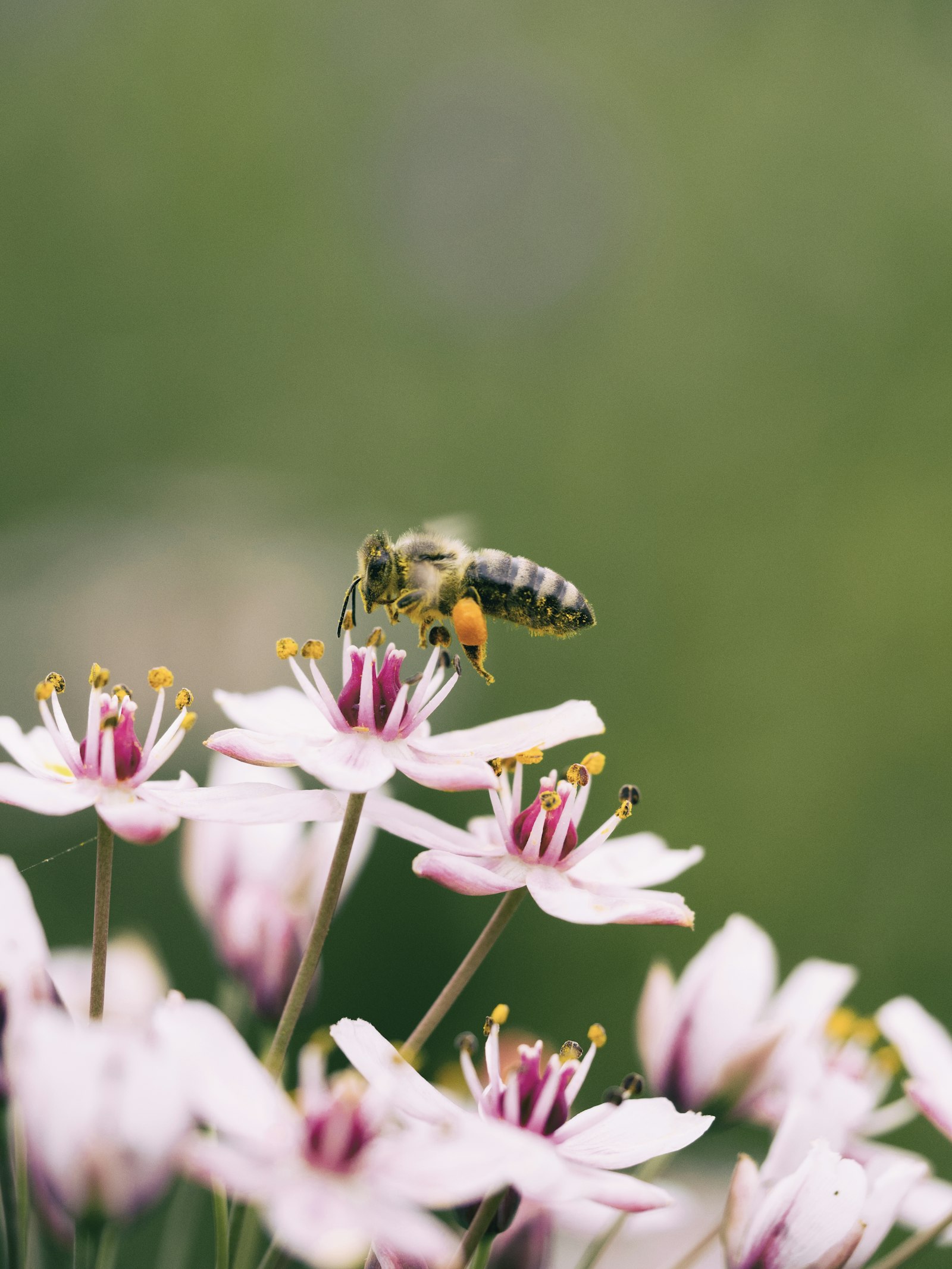
A loaded honey bee flies slower than an empty one. The nectar she's carrying - up to 40 milligrams, nearly half her body weight - changes her aerodynamics and increases her energy expenditure on the return trip. She burns roughly 2 milligrams of honey per kilometer of flight. At 1 kilometer from the hive, the round trip costs about 4 milligrams of fuel. At 3 kilometers, it's around 12 milligrams. At 5 kilometers, she's burning through 20 milligrams of fuel to deliver 40 milligrams of nectar that will yield perhaps 8 milligrams of honey after processing.
The math gets uncomfortable past 5 kilometers. The fuel cost of the trip approaches the energy value of the cargo. The colony is close to breaking even, and if the nectar quality is average rather than exceptional, it's losing ground. This is why honey bees don't forage at unlimited range even when flower sources exist far from the hive. The wings can carry them farther than the economics justify.
The Typical Range
Under normal conditions, the vast majority of a colony's foraging happens within 1 to 2 miles (1.5 to 3 kilometers) of the hive. Radio tracking studies and radar experiments - including work that attached 12-milligram transponders to individual bees - show that median foraging distance clusters around 600 to 800 meters. Most bees, most of the time, aren't going far.
The mean foraging distance in a productive landscape is closer to 1 kilometer. In agricultural landscapes with good floral resources (clover pastures, orchards in bloom, diverse field margins), bees rarely need to go farther. The waggle dance encodes distance information in the duration of the waggle run, and dance observers in the hive adjust their search patterns accordingly. A short-duration dance recruits foragers to something nearby. A long-duration dance is advertising something far enough away that the colony makes a decision, implicitly, about whether the trip is worth it.
The Apiary Project tracks honey bee health data so you don't have to.
Explore the Data Hub →Maximum Range
The documented maximum is around 13 kilometers (8 miles), recorded in exceptional circumstances - severe dearth with no forage available locally. This is not a typical foraging trip. It's what happens when a colony is desperate. A bee returning from 13 kilometers has spent most of the value of her load on the return flight. The colony survives but doesn't thrive on foraging at this range.
More practically relevant: during the summer dearth that follows the main nectar flow in most of the US, colonies expand their foraging radius as nearby sources dry up. A colony that was working within 500 meters in May may be pushing 3 to 4 kilometers by August. This expansion in range correlates with the robbing behavior that becomes common during dearth - a neighboring hive's honey stores start looking attractive to foragers whose return on distant natural sources has dropped.
The Territory Calculation
A foraging radius of 1.5 kilometers (roughly 1 mile) encloses approximately 7 square kilometers of territory - about 1,750 acres. At 2 kilometers, it's 12.5 square kilometers. The colony doesn't uniformly exploit this entire area; it exploits it selectively, directing foragers to the highest-value sources identified by scouts and advertised through the waggle dance.
With 20,000 to 25,000 foragers active simultaneously, the colony effectively monitors an enormous patch of landscape. Individual bees scout continuously - sampling new sources, updating information on known ones, returning to dance or not dancing depending on what they found. The foraging territory is a dynamic information landscape that the colony reads in real time and responds to within minutes.
This is why a single hive, placed well, can pollinate large areas. The reach isn't unlimited but it's substantial, and the workforce density - 20,000 coordinated foragers from a single location - is what makes commercial pollination viable.
How Distance Is Communicated
The waggle dance encodes distance through time: the duration of the waggle run correlates with the distance to the food source. A dance with a 1-second waggle run indicates a source roughly 1 kilometer away. A 3-second waggle run indicates about 3 kilometers. The relationship isn't perfectly linear, but it's consistent enough that recruits calibrate their search to the right distance range.
The dance also encodes direction: the angle of the waggle run relative to vertical on the comb represents the angle of the food source relative to the sun's azimuth. A forager returning from a source 30 degrees to the left of the sun performs a waggle run angled 30 degrees to the left of vertical. Recruits who follow the dance interpret the direction and distance, fly to the approximate location, and search for the source using scent cues from pollen on the dancer's body.
The communication system allows the colony to concentrate foragers on high-value sources at varying distances, without any individual bee knowing the whole picture. The dancer knows where she's been. The recruit knows where to go. Neither knows the colony's full foraging strategy. The strategy emerges from thousands of individual dances and thousands of individual flights.
The Speed Difference
A forager flies at roughly 15 miles per hour unloaded. With a full honey crop, she's closer to 12 miles per hour. The speed reduction isn't dramatic, but it compounds over longer distances - a 3-kilometer round trip takes longer when you're slower on the return leg, and during that additional time in flight, you're burning fuel.
The energy budget for a foraging trip: roughly 10 milligrams of honey consumed to power the flight, plus the metabolic cost of the time spent at the flower source. Against that: 40 milligrams of nectar collected (under good conditions), which will yield 8 to 10 milligrams of finished honey. Net gain per trip at short distances: 5 to 8 milligrams of honey equivalent. At 3 to 4 kilometers: close to break-even. At 5 or more: potentially a net loss in poor nectar quality.
The colony's foraging strategy - implicitly encoded in which dances get followed and which don't - is essentially solving this optimization problem across thousands of simultaneous foragers and thousands of simultaneous options.
What This Means for Hive Placement
The foraging range economics explain several patterns beekeepers observe without always connecting to the underlying math.
Colonies placed in areas with poor local forage produce less honey even if excellent forage exists within 3 to 4 kilometers - because the energy cost of reaching that forage reduces the net return. Commercial beekeepers who move colonies to almond orchards or clover fields are not just providing access to flowers; they're minimizing the gap between colony and resource, keeping foragers in the profitable part of the energy curve.
The migratory beekeeping model - moving colonies across the country to follow successive bloom events - is fundamentally about keeping hives within the optimal foraging range of high-value crops, rather than leaving them stationary while the crops cycle through bloom and dearth seasonally.
And the swarm trap placement research Thomas Seeley conducted at Cornell found that swarms evaluate potential nest sites partly by the foraging landscape around them - how far to productive flowers, what the competitive density of other colonies looks like. The swarm scouts aren't just assessing the cavity. They're assessing the territory.
The Limit
Five kilometers is roughly where the math stops working. Past that, under normal nectar quality conditions, the bee is flying for the colony's benefit in a theoretical sense but not in a practical one. The wings will wear out on trips that don't pay.
The wings always wear out eventually. The question is how much honey they produce before they do.