What Eats Bees: The Full List Is Stranger Than Bears
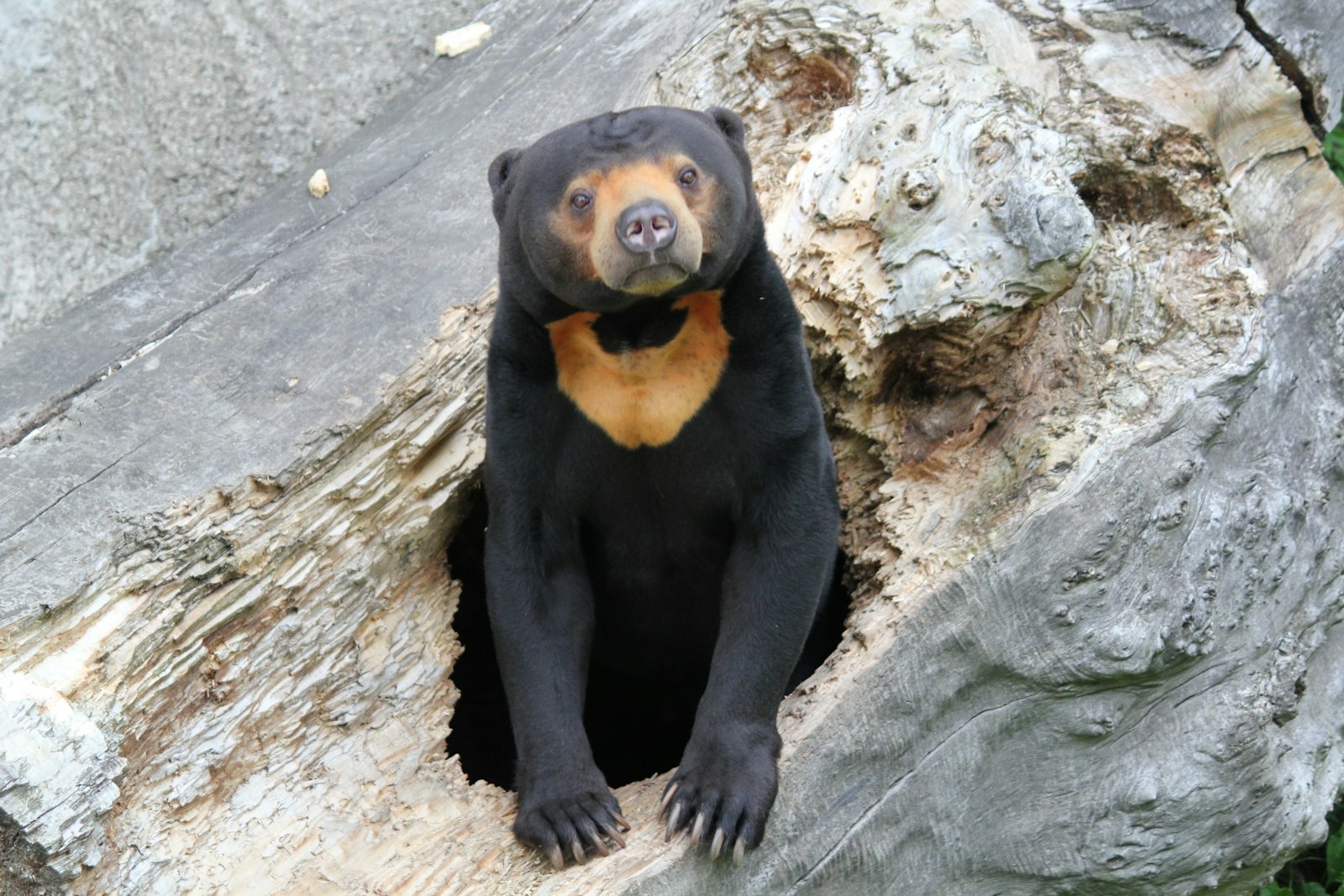
The bear shows up in every children's book. Winnie-the-Pooh, the honey-stealing, hive-raiding bear - it's practically cultural law that bears eat honey and bees are their natural nemesis. What those books don't mention is that a striped skunk has probably been visiting the same hive every night for three weeks, scratching at the entrance, waiting patiently while guard bees come out to investigate the noise, and eating them one by one before waddling home.
The skunk has developed what can only be described as a sustainable harvest strategy. It never destroys the colony - just reduces the guard population slightly, consistently, on a schedule it has optimized over weeks of practice. The bear just wanted a snack and left the place a wreck.
Bears get the mythology. The skunk gets the results.
The Bear: Spectacular, Messy, Overstated
A black bear raiding a hive is after brood - bee larvae, which are protein-rich and nutritionally more valuable than the carbohydrates in honey. The honey is a bonus. A bear will tear apart a hive, eat the brood combs, consume whatever honey is accessible, and leave the wreckage for the beekeeper to find in the morning. The damage is structural: destroyed boxes, broken frames, bees scattered across a 10-foot radius.
The stings don't do much. A bear's thick fur and tough skin make bee venom delivery genuinely difficult, and the ones that sting successfully are mostly stinging the face and around the eyes. Bears tolerate this the way a person might tolerate a mild inconvenience in pursuit of a very large reward. Brown bears cause similar damage in regions where they overlap with beekeeping - in parts of Eastern Europe, bear predation on managed hives is a documented economic problem, not a rare event.
But bears are episodic. The skunk is methodical.
The Apiary Project tracks honey bee health data so you don't have to.
Explore the Data Hub →The Skunk's Night Shift
A striped skunk hunting bees doesn't raid the hive at all. It approaches the entrance after dark, scratches at the landing board, and waits. Guard bees emerge to investigate. The skunk eats them, rolls away from the inevitable stings with its thick hide absorbing most of the damage, and comes back tomorrow to do it again.
The damage isn't catastrophic in any single visit. It's cumulative. Regular nightly visits chip away at the guard population, stress the colony, and reduce productivity over weeks. Experienced beekeepers identify it from the scratch marks on the landing board and the pattern of missing guards - the colony gets jumpier during inspections, the entrance bees more aggressive, because the hive has been under low-grade assault for a month.
Birds With Specific Techniques
The European bee-eater (Merops apiaster) is a brilliantly colored bird that has built its entire lifestyle around eating bees safely. It catches a honey bee in flight, carries it to a branch, and beats it against the wood 20 to 30 times. The beating isn't about killing the bee - the bee is already dead from the initial impact. It squeezes out the venom sac and strips off the stinger before swallowing. Young bee-eaters do this wrong for weeks, stinging themselves in the beak in the process, before they get the technique right. It is a learned skill, passed down through observation.
A single bee-eater consumes around 250 bees per day. A nesting colony of bee-eaters - they nest communally in earthen banks - can remove tens of thousands of foragers from the local bee population during a single breeding season. The bee-eater has since expanded northward through Europe, which is becoming a localized issue for beekeepers in regions where it establishes.
Beyond bee-eaters, a range of other birds take honey bees opportunistically: swallows and swifts intercept foragers mid-flight, woodpeckers breach hive walls to reach brood, and in North America, the eastern kingbird takes bees in flight with some regularity. What they share is target selection - they're almost exclusively going after foragers, the bees that are outside the hive and accessible. The colony's interior stays largely protected. The pressure lands specifically on the population the colony can least afford to lose in large numbers.
The Crab Spider, Which Nobody Talks About
Crab spiders (family Thomisidae) are ambush predators that sit motionless on flowers - particularly white and yellow ones where they can camouflage - and wait for pollinators to land. When a bee arrives, the spider seizes it behind the head, where the bee can't reach with its stinger, and injects venom that kills within seconds. A single crab spider on a heavily visited flower can take multiple bees per day across an entire foraging season.
It is not a dramatic death. There's no dramatic footage of it. But aggregated across a landscape, across a full summer, the toll from spiders on the foraging population is substantial in a way that rarely gets discussed alongside the bear.
Asian Giant Hornets: A Different Category Entirely
The Asian giant hornet (Vespa mandarinia) operates on a different scale than every other predator on this list. A scout locates a honey bee colony and marks it with pheromones. The resulting assault - called the slaughter phase - involves a group of hornets decapitating guard bees and workers at the entrance in a coordinated attack, killing hundreds in under an hour, before occupying the hive and harvesting brood.
European honey bees have essentially no evolved defense against this. Japanese honey bees, which share an evolutionary history with the Asian giant hornet, have developed a counter: they mob the scout before it can mark the hive, then vibrate their flight muscles around the trapped hornet to generate heat that kills it. European colonies, which never encountered this predator in their evolutionary history, don't do this and are effectively defenseless against a coordinated assault.
The yellow-legged hornet represents a related threat - smaller, no slaughter phase, but it stations itself at hive entrances and picks off foragers one at a time, creating a steady attrition that weakens colonies over weeks.
Varroa: The Predator Already Inside
Varroa destructor is an ectoparasite, technically - it lives on the outside of developing bees inside sealed brood cells, feeding on fat body tissue. But the functional effect is predatory. Mites feeding on bee larvae and pupae cause physical deformities, compromise immune function, and vector viral pathogens that can devastate colony health.
What makes varroa unusual in this context is that it operates beyond the colony's defenses. Guard bees at the entrance don't stop it. The colony's chemical communication systems don't flag it. It reproduces inside capped brood cells, behind wax walls, in exactly the location the workers themselves chose as the safest place in the hive. Which is why it's been so catastrophically effective since spreading out of its original host in Asia - it found the one blind spot in the colony's entire defensive architecture.
The Full Picture
Bears, skunks, bee-eaters, crab spiders, robber flies, dragonflies, hornets, mites, and - for thousands of years before managed beekeeping - humans harvesting honey and brood from wild colonies. The list keeps going, and what it describes is a colony sitting on an enormous concentration of resources: stored carbohydrates, protein-rich brood, thousands of individual insects in one location. That kind of concentrated resource doesn't stay untouched. Every item on the list represents a different evolutionary solution to the same problem of how to access it.
The annual colony loss data tracked by USDA and the Bee Informed Partnership measures the downstream effects of some of this - primarily varroa, but also the habitat pressures that force bees into marginal foraging conditions where exposure to everything else increases. The Apiary Project aggregates that data as part of monitoring the broader state of US colony health.
The bear gets the mythology. But the varroa mite is reproducing in a sealed cell right now, and the skunk already has a scratching schedule.